
How Practicing the Arts Can Aid in Traumatic Brain Injury + Concussion Recovery.
Have you ever wondered why Keep Your Head Up places such a strong emphasis on the arts? While sports and physical activities offer incredible benefits for mental and physical health, the arts hold a unique and often underappreciated power, especially for individuals recovering from a traumatic brain injury (TBI) or concussion. From emotional healing to improved motor skills and visual perception, to rebuilding identity and community post brain injury, the arts can address nearly every aspect Keep Your Head Up stands for.
My name is Maya Stone. I am currently going into my third year at the University of Guelph where I am studying Creative Arts, Health, and Wellness. In this blog, I will provide some key information about why arts therapies can transform your healing journey just as much as physical activity… from a slightly biased, but science backed view.
I would love to start off with a quote from Daisy Fancourt, the director of WHO collaborating center on Arts & Health.:
“You eat your 5 (veggies) a day, you walk your 10,000 steps outside, you get 8 hours of sleep, but how much art have you consumed recently? Art (is) the forgotten fifth pillar of health and wellness.” (Fancourt, 2026)
This quote perfectly captures the untapped potential of the arts and their ability to reshape our lives. The arts stimulate the mind, calm the nervous system, and restore a sense of order when the world feels overwhelming. And the best part? You don't need years of practice to experience the benefits! Simply engaging in the arts can help lubricate neural pathways damaged by TBI or concussion.
If you're still unsure about the arts, I don’t blame you! The arts can put a lot of pressure on individuals when they're first starting. Before you start feeling that pressure to be perfect, let me break down some of the arts’ key impacts on TBI and concussions.
First of all, there are a lot of neural opportunities within this field. The arts engage both hemispheres of the brain, combining motor skills with mental focus. Because of this, there is evidence towards the arts improving neural plasticity, which is the brain's ability to reorganize its physical structure in response to learning, experiences, or injury. This is beneficial during the recovery of a brain injury because it allows the brain to adapt to structural changes. This doesn't only guide the brain in repairing the issues, but it can improve memory, attention, and problem-solving skills. A study by Makuuchi et al. (2003) found that creative activities activate the parietal lobes, which play a key role in in integrating sensory information. This bilateral activation may support post-injury recovery and use-dependent plasticity, which is the brain’s ability to adapt based on experience.
For those struggling with fine motor coordination after a TBI, the arts offer a meaningful and engaging way to rebuild strength and precision. According to a systematic review done by Corrigan et al. (2023), up to 78% of individuals who experienced a severe TBI struggle with fine motor coordination. Arts activities provide repeated opportunities to strengthen hand muscles, improve hand–eye coordination, develop finger dexterity, and refine precision and control needed for everyday tasks.
Staying on the topic of neurology, concussions and TBI can often lead to mental health issues such an anxiety, depression, or in more severe circumstances, PTSD. Heenan (2007) explains “The role that the arts can play in improving mental health outcomes is twofold. In conjunction with art therapists, they can be used as a therapeutic care strategy. Secondly, they can play a key role in breaking down mental health problems and can help reintegration into the wider community. There is a range of ways that art can make a contribution to promoting positive mental health. It can be a self‐initiated activity providing a form of self‐expression; it can be used to improve care environments; it can change the way society views mental illness; and can also provide service users with a voice.”
Whether it’s painting, writing, or music, the arts provide a safe outlet for emotions and a way to process trauma.
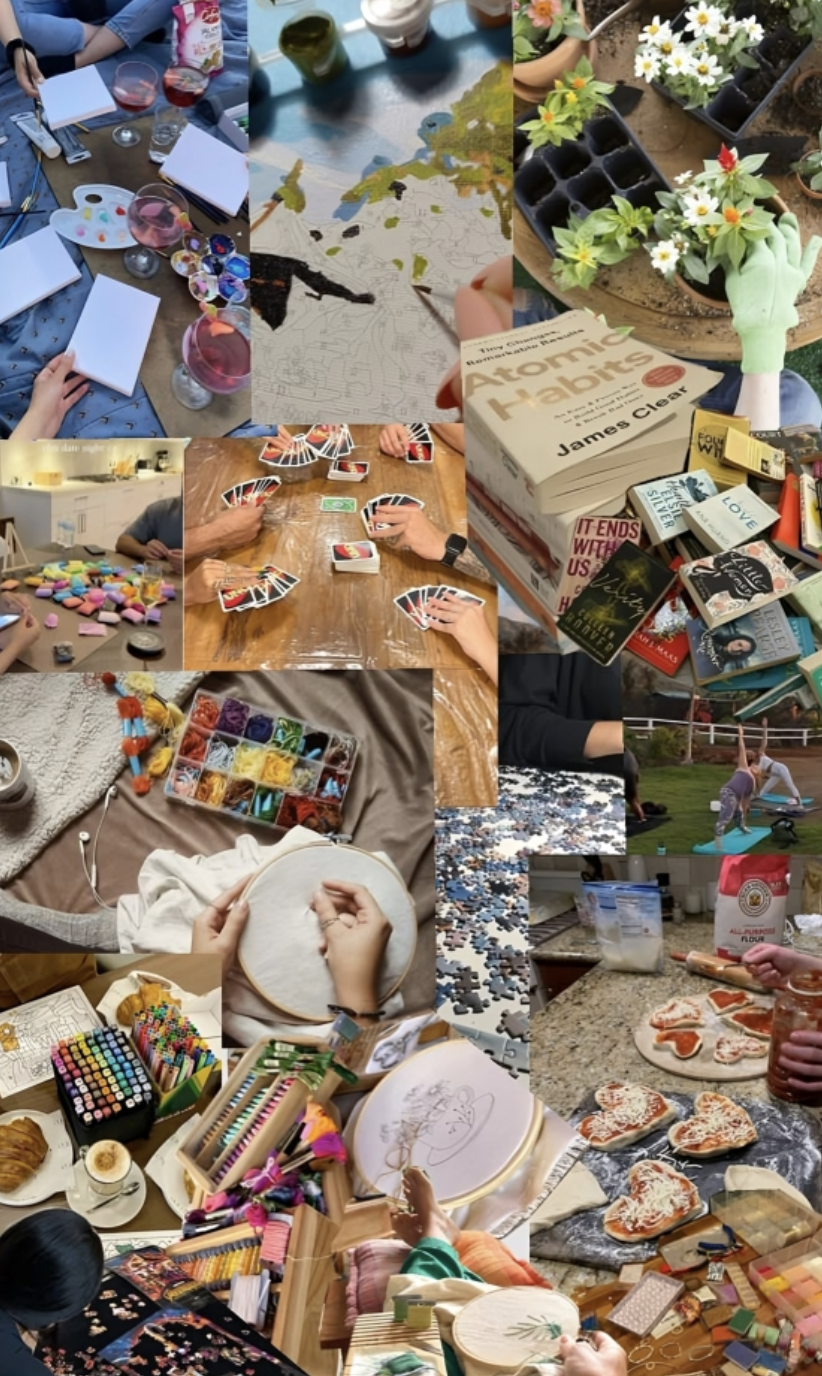
Another large factor often affected by TBI/concussion is social life and identity. Injury to the brain can leave individuals feeling lost and confused as they are adjusting to their new ways of life. The arts can remedy this by fostering a sense of belonging through peer support and feedback, providing structure and direction in therapy, and encouraging self-exploration and expression.
As you see, the arts are underestimated when it comes to TBI and concussion recovery. Not only are they extremely beneficial to physical health, brain health, neural plasticity, and fine motor skills, but they can also help individuals reconnect with their community, their identity, and nurture their wellbeing. Sell & Murrey (2006) add that art therapy can offer a sense of control over one’s healing journey and a way to integrate the injury into a new, empowered sense of self.
The evidence is clear: the arts are not just a hobby; they’re a vital component of healing from TBI and concussion survivors. They address physical, cognitive, emotional, and social needs, making the arts a comprehensive tool for recovery. The last note I would love to leave everyone with is this: perfection is not the goal! You are so much more capable than you realize. The “ARTS” are many things. They can be dancing, singing, making music or beats, drawing, knitting, and so many more, but the art of creation itself is what matters.
If you are interested, check out our mindful moments program to dip your toes in! In addition, for more details of the studies referenced, all articles are references below!
CITATIONS
Bystrup, M. R., Essom-Stenz, A., & Rytter, H. M. (2025, January 2). Long-term symptoms after concussion: To find meaning in life through art when your head is “On fire.” Scandinavian University Press. https://www.scup.com/doi/full/10.18261/njach.6.1.1
Centers for Disease Control and Prevention. (2025, September 15). Symptoms of mild TBI and concussion. Centers for Disease Control and Prevention. https://cdc.gov/traumatic-brain-injury/signs-symptoms/index.html
Halim, N. B. A., & Tahar, M. M. B. (2020, March 29). Fine Motor Skills Through Art therapy: A case study. Global Citation Index. https://series.gci.or.id/article/295/15/icsar-2020-2020
Heenan, D. (2006). Art as therapy: an effective way of promoting positive mental health? Disability & Society, 21(2), 179–191. https://doi.org/10.1080/09687590500498143
Kline, T. (2016, May 23). Art therapy for individuals with traumatic brain injury: A comprehensive neurorehabilitation-informed approach to treatment: Art therapy: Vol 33 , no 2 - get access. Taylor & Francis Online. https://www.tandfonline.com/doi/full/10.1080/07421656.2016.1164002
The role of art and craft in enhancing fine motor skills for young children. Fennies Nurseries. (n.d.). https://www.fennies.com/post/the-role-of-art-and-craft-in-enhancing-fine-motor-skills-for-young-children