
A KYHU Community Member’s TBI Story
Meet Anonymous! They have been a member of the Keep Your Head Up Foundation’s Mindful Moments Program since its launch in 2022 and have been a frequent member since.
Here is their story (interview-style):
Tell us a little about yourself:
I am a Canadian living with an acquired Traumatic Brain Injury (TBI). I am learning to navigate a new life with cognitive, physical, and emotional challenges that can accompany a TBI.
How did your brain injury/concussion happen:
Approximately 7 years ago, I was in a car accident when a distracted driver mistakenly hit my vehicle. This unfortunate accident resulted in me acquiring a TBI. Following the impact, I was immediately confused and had a headache, sore neck, and balance problems, and was diagnosed with a concussion. Over the course of days/weeks, I began experiencing persistent pain (in my head, neck, and eyes), nausea, extreme fatigue, sensitivity to lights and noise, cognitive challenges (memory, comprehension, processing speed), dizziness, poor balance, and insomnia.
What is one thing you'd like people to know about your experience:
Having a brain injury can be an extremely confusing and isolating experience. I looked like my usual self from the outside (no broken bones or visible injuries), but my brain was struggling to process information, follow conversations and instructions, remember and understand what I read or heard, make decisions, and keep up with my usual routine. It was difficult for myself and my family to understand what was going on. At the time, I didn't know anyone else with a brain injury and I felt very alone. I felt like I didn't belong in my 'old life' and I didn't know how to navigate my new life with a brain injury.
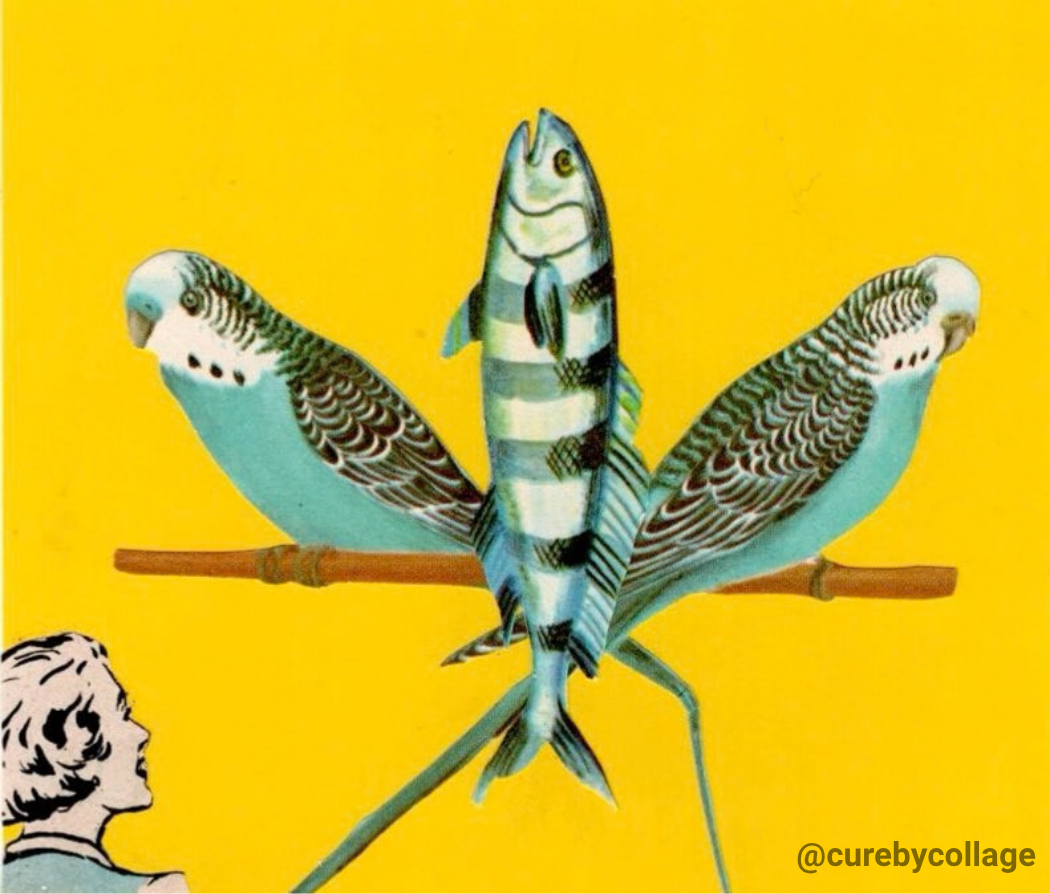
Collage titled 'I Belong'
I created this piece to reflect my experience with isolation and the changes that can occur following a TBI.
What were some of the biggest challenges you faced during recovery:
The biggest challenge I experienced was trying to balance all of the responsibilities in my life. The cognitive and physical consequences of a concussion impacted me profoundly and, even though I desperately wanted to, I just couldn't do it all anymore. I ended up losing a career that I loved, I missed many family milestones, I resigned from volunteering, I lost many of my previous hobbies, and I wasn't able to contribute to household duties like I used to.
What helped you most along the way:
There were 3 things that helped the most:
1) Learning how to pace myself - before acquiring a brain injury, my life was fast paced. I was busy with work, raising children, volunteering, hobbies, and so on. I was able to manage all of these things and I had a very full life. After the car accident, I wanted to be able to continue doing all of these things, and when I tried to do too much, I experienced an even bigger symptom flare up that sometimes left me in bed for weeks. It took me a long time, but when I finally learned how to pace myself properly, I was able to minimize symptom flare ups and engage in my life in a new way.
2) Mindfulness - the practice of mindfulness helped me slow down and be in the moment. It helped me ease my anxiety about my health and my future, and it helped me become more self-aware.
3) Gratitude - during a prolonged period of difficulty, someone reminded me that there is always beauty in the darkness. I wasn't sure if I could find anything beautiful, as I was experiencing significant hopelessness. I decided to start a daily gratitude practice, in which I wrote down 3-5 things I was grateful for. Over time, it became easier to notice things I was grateful for, and eventually the darkness didn't seem so dark. I started to see beauty in nature, people, and art. I noticed how beautiful it is to move, laugh, experience kindness, and to be present in the world.
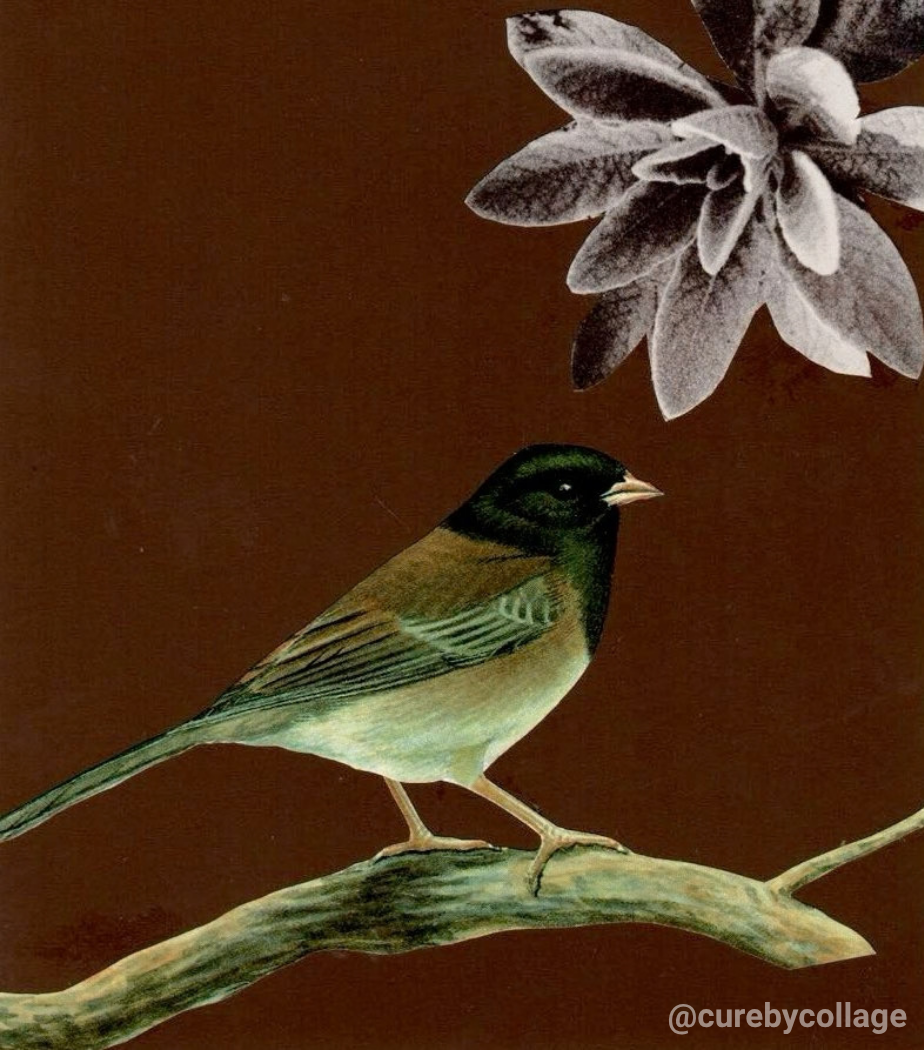
Collage titled 'Beauty in the Dark'
I created this piece as a reminder that there is always beauty even during difficult times.
Was there anything you wish you had known earlier?
I wish that someone would have told me that the impacts of a TBI can be persistent. I was initially told that I should be better within a few weeks. Then it was months, then a bit longer, and so on. I kept chasing the finish line, and in reality, the finish line wasn't a 'cure' like I thought it would be. Perhaps it was my brain injury and how it impacted my comprehension, but I never understood from the outset that I might have persistent disabilities. While I've always been hopeful about my recovery and continue to be so, I also think that hearing about the possibility of persistent disabilities may have helped me reach acceptance of my situation sooner.
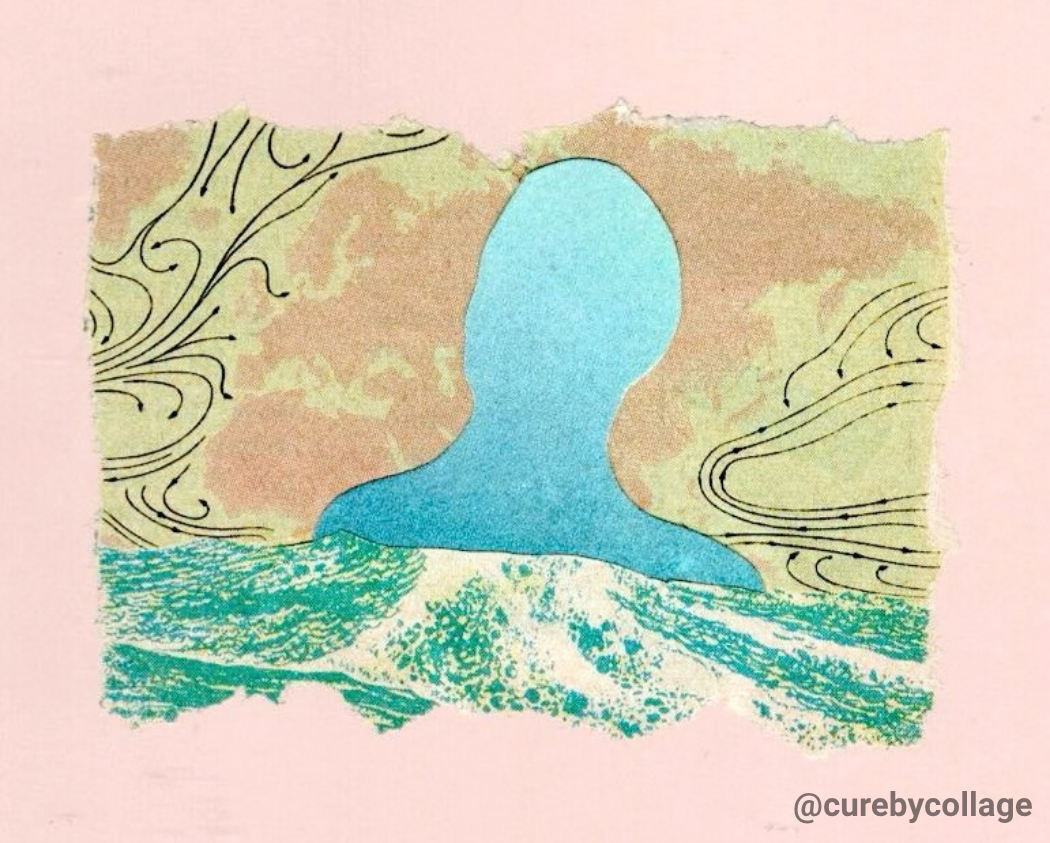
Collage titled 'Acceptance'
I created this piece as a reminder to myself that accepting my new life can be easier than holding onto my previous one.
How has art or creativity been part of your recovery journey?
At the very beginning of my recovery journey, I was focused on traditional medical appointments, and honestly, I didn't feel like I had time to explore art or creativity. I remember the day when one of my healthcare providers recommended that I start adding mindfulness into my recovery. I tried a bunch of things by myself - for example, I bought a camera intending to start photography, but even figuring out the camera settings was too much cognitive effort, so I abandoned that plan. Shortly thereafter, I heard about the Keep Your Head Up Foundation's virtual Mindful Moments program that was starting. I signed up for that first class, and in fact, I attended almost every class during the first year that the program launched! The Mindful Moments classes were fantastic - they were organized by KYHU (so I didn’t have any cognitive fatigue associated with trying to plan an activity), they were accessible (could be done from home, free of charge, had the option of turning the screen off, etc.), there was a lot of variety, and the instructors were very understanding and gave options to meet the needs of attendees.
What does creating art mean to you?
Creating art is a way for me to process difficult emotions, communicate without using words (which saves my cognitive energy), and take a mini vacation from my health struggles. It lets me transform my experience of living with a brain injury, and I hope it helps others who may be in similar situations. My art can be found on Instagram at @curebycollage.
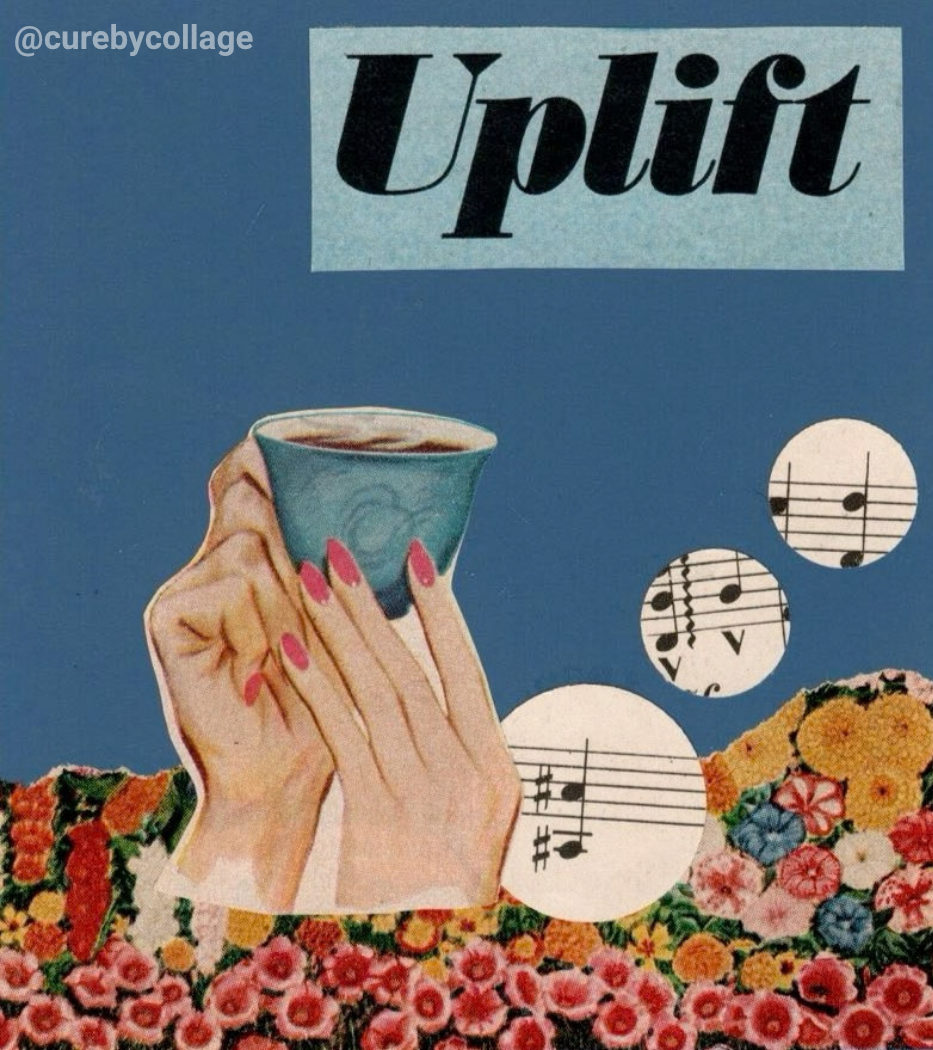
Collage titled 'Uplift'
I created this piece to reflect how art and community can come together to uplift us during difficult times.
What has being part of the Keep Your Head Up Foundation community meant to you?
Through its virtual Mindful Moments program, the Keep Your Head Up Foundation has given me a place to create and explore mindfulness in a way that is accessible to my cognitive, physical, geographic, and financial situation. The KYHU community consists of amazing instructors who understand what it is like to live with a brain injury, and attendees who are truly supportive of each other. It really has been an instrumental part of my recovery.